TMS Therapy, and the Five-Day Protocol That Changed the Conversation
Magnetic stimulation of the prefrontal cortex has been FDA-cleared for depression since 2008. Stanford's accelerated version compressed six weeks into five days.
Updated August 5, 2026
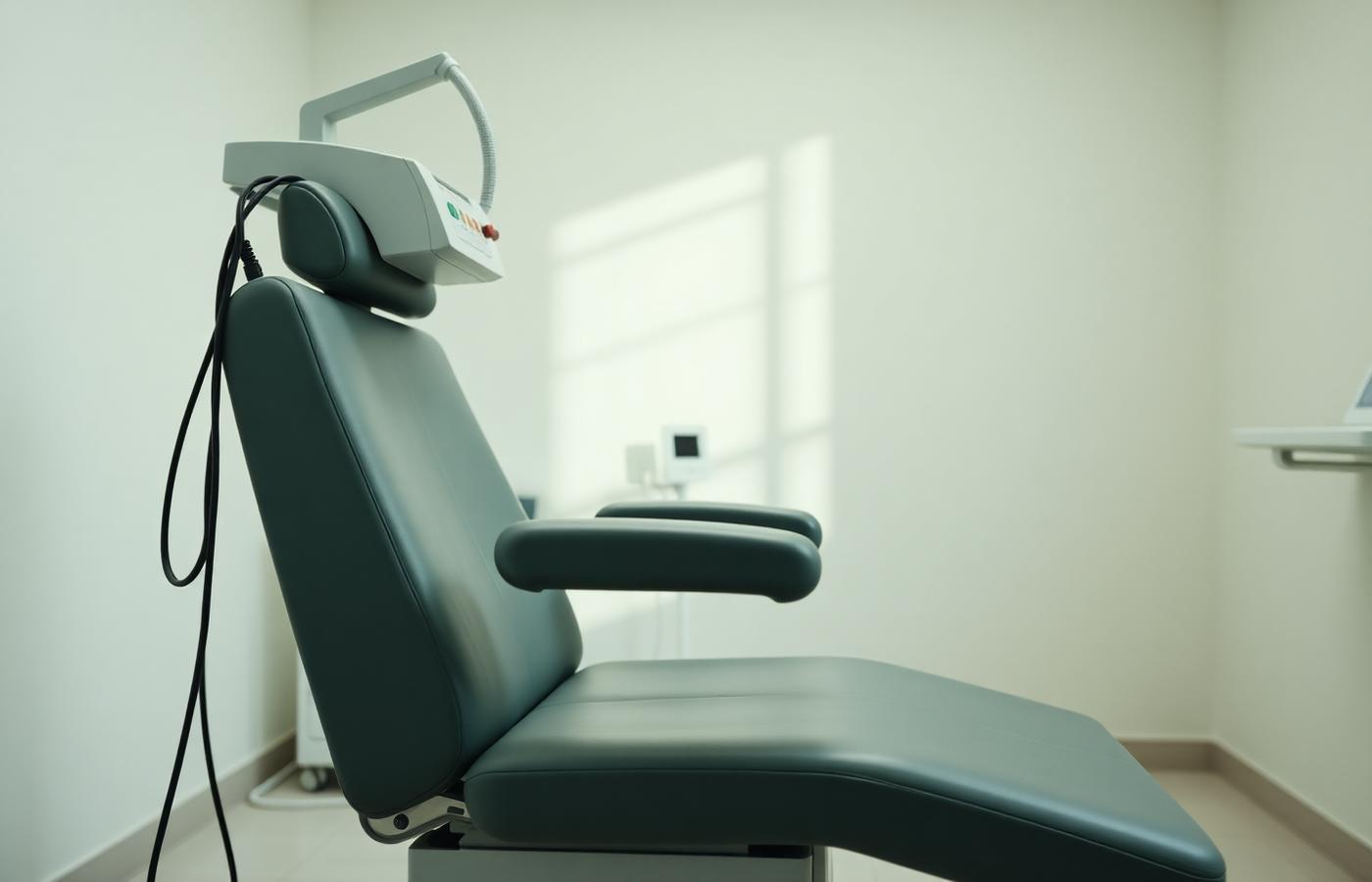
Transcranial magnetic stimulation is the least exotic thing on this site and one of the better-evidenced. A coil held against the scalp generates a magnetic pulse that induces current in the underlying cortex, usually the left dorsolateral prefrontal cortex. No anaesthesia, no sedation, no systemic drug.
Standard repetitive TMS is FDA-cleared for major depressive disorder, obsessive-compulsive disorder, and smoking cessation. For treatment-resistant depression, meta-analyses put response rates around 50 to 60 percent and remission near 30 percent across a four-to-six-week course of daily sessions — meaningful numbers in a population defined by prior failure.
SAINT and the compression of the course
The Stanford Neuromodulation Therapy protocol, known as SAINT, changed two things: it used functional MRI to personalise the stimulation target for each patient, and it delivered ten intermittent theta-burst sessions per day for five days instead of one session per day for six weeks. The double-blind trial published in the American Journal of Psychiatry in 2021 reported remission in roughly half to three-quarters of participants within that week. FDA clearance followed in September 2022.
Twenty-nine participants at one site. An extraordinary result that now needs to survive being ordinary — replicated, multi-site, and followed for longer.
The limits worth stating
The SAINT trial was small and single-site, and durability data are still accumulating; relapse over months is the open question. Access is the other constraint. MRI-guided targeting and five days of intensive sessions are expensive, insurance coverage is inconsistent, and the number of centres offering the accelerated protocol remains limited. Conventional rTMS is far more available and far better characterised over time.
Side effects are generally mild: scalp discomfort and headache are common, and seizure risk is very low but non-zero, which is why screening for seizure history and certain medications matters. For anyone weighing options after several failed antidepressant trials, TMS is one of the few frontier-adjacent interventions that is both regulated and reimbursable.
Sources & evidence
- Cole et al., Stanford Neuromodulation Therapy: a double-blind randomized controlled trial, American Journal of Psychiatry (2021)
- Cole et al., Stanford Accelerated Intelligent Neuromodulation Therapy, American Journal of Psychiatry (2020)
- FDA clearance announcement, Magnus Medical SAINT system (September 2022)
- Meta-analyses of rTMS in treatment-resistant depression, Brain Stimulation (2023–2024)
This article is general information, not medical advice. See our Editorial Standards.