Ashwagandha: What the Trials Actually Show — and What the Regulators Found
The adaptogen is one of the most-studied botanicals on the supplement shelf, with more than $165 million in annual U.S. sales. The stress data is better than most herbs can claim, the safety story is worse than most buyers assume, and one European country has made it illegal to sell.
Revuelt Health
October 20, 2026 · 10 min read
Reported and edited by Revuelt Health. Editorial standards
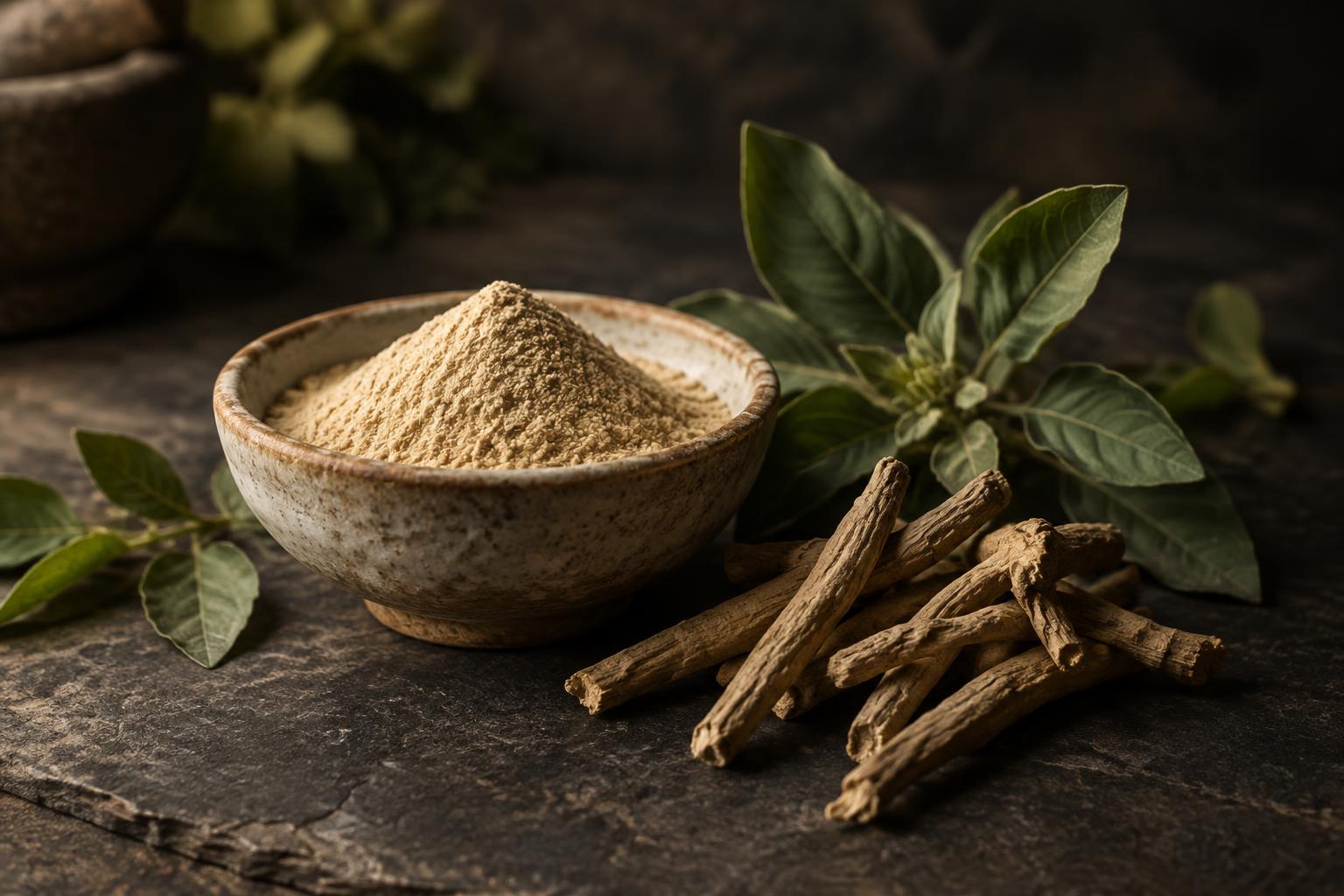
Ashwagandha has the kind of evidence file most supplements would envy: multiple randomized trials, several meta-analyses, and a mechanism story — “adaptogen” — that at least gestures at something testable. It is among the best-selling botanicals in the United States, with more than $165 million in tracked 2024 sales and, by one 2025 industry analysis, roughly one in five supplement shoppers having bought it in the past year. It is also the rare herb about which a national food authority has said plainly: this should not be sold as food.
Both halves of that sentence are true at once, and most of what is written about ashwagandha online manages to report only one of them.
What holds up
For perceived stress and anxiety, the pooled trial evidence genuinely favors the herb. A 2022 meta-analysis in Phytotherapy Research, covering 12 randomized trials and 1,002 participants, found large standardized reductions in anxiety and stress scores versus placebo. A 2026 dose-response meta-analysis broadened the base to 22 trials and 1,391 adults and again reported improvements in stress, anxiety and depression measures. Trial doses are typically 240 to 600 milligrams a day of standardized root extract, over weeks, not single doses.
Sleep is the second defensible claim. A 2021 systematic review and meta-analysis of five placebo-controlled trials in 400 adults found a small-to-moderate pooled improvement in sleep measures, with the effect more apparent in people with insomnia, at doses of at least 600 milligrams a day, and over at least eight weeks. Athletic-performance data is thinner but not empty: a 2021 Bayesian meta-analysis found favorable signals across strength and cardiorespiratory measures, with trials too varied to quote a single improvement percentage.
What doesn’t hold up
The headline effects shrink under the kind of scrutiny the marketing never mentions. The 2022 meta-analysis’s own authors rated the certainty of the evidence as low, with very high statistical heterogeneity — the trials differed in extracts, doses, questionnaires and populations to a degree that makes the pooled numbers soft. And the cortisol story, the most-quoted fact in ashwagandha advertising, curdles on inspection: a 2025 meta-analysis focused specifically on it found cortisol reductions of about 1.2 µg/dL — but no statistically significant pooled effect on perceived stress at all. A biomarker moved; the subjective experience that people take the herb for did not, in that pooled estimate.
None of this establishes ashwagandha as a treatment for an anxiety disorder, and nothing in the literature supports positioning it against first-line care: no trial shows it matching cognitive behavioral therapy or an SSRI, and the NIH’s own assessment calls the evidence promising but preliminary. The performance claims fare similarly — “some small trials suggest improvements in selected strength measurements” is the supported sentence; “proven to build muscle” is not.
A 2025 meta-analysis found cortisol fell about 1.2 µg/dL — and found no significant effect on how stressed people actually said they felt.
The safety story is the part buyers skip
The liver signal is genuine and no longer deniable as anecdote. A 2020 case series described five people who developed cholestatic liver injury with jaundice two to twelve weeks after starting ashwagandha, all recovering after stopping. A 2023 Indian series was darker: of eight single-ingredient ashwagandha liver-injury cases identified over three years, five patients had underlying chronic liver disease, three developed acute-on-chronic liver failure, and all three died. Chemical analysis of the products found no contaminant to blame. These are uncontrolled case series — they cannot tell anyone what percentage of users are injured — but they establish that the injury happens with the herb itself, and that people with existing liver disease are the wrong population to test it in.
Regulators have moved. Australia’s TGA published a safety update in July 2026 acknowledging continued liver-injury reports — including international liver-failure cases and transplantation — and advising against use in existing liver disorders. Denmark’s food authority has gone furthest, stating that ashwagandha is illegal to sell as food, including in supplements, after its national toxicology assessment raised reproductive, endocrine, immune and nervous-system concerns. Iceland’s regulator restricted extract products after a 2018 recall; Norway’s old prescription classification was repealed in 2020; Sweden has paused, awaiting an EU review. The internet’s shorthand — “banned in Europe” — is both overbroad and, in Denmark’s case, an understatement.
Two product-quality problems compound the pharmacology. In October 2025, the American Botanical Council’s laboratory program published guidance documenting that material sold as root-only is sometimes adulterated with cheaper leaf and stem — and that withanolide-standardized testing cannot reliably detect the substitution, because the aerial parts contain withanolides too. And while a December 2025 FDA warning about heavy metals in Ayurvedic products concerned specific unapproved products rather than ashwagandha generally, it independently establishes that serious lead, mercury and arsenic exposure occurs in this product category.
Interactions close the ledger. Ashwagandha affects thyroid hormone levels, with case reports of thyrotoxicosis — relevant to anyone with thyroid disease or on thyroid medication. A 2025 conference case report described suspected serotonin syndrome in a young woman taking escitalopram alongside high-dose ashwagandha, and a 2023 adverse-event review flagged suspected interactions with several SSRIs. The NIH also lists potential interactions with sedatives, immunosuppressants, blood-pressure and diabetes medications. Pregnancy is a consensus avoid.
What a reader should take from this
Ashwagandha is not snake oil, and it is not harmless herbal tea. For short-term stress and sleep, randomized evidence supports a modest effect — most convincing at 600 milligrams a day over eight-plus weeks, in people without liver disease, on no interacting medications, using a reputable root-extract product. For diagnosed anxiety disorders, chronic insomnia, or anything an SSRI would treat, the evidence does not support it as a replacement, and the interaction and liver data argue for physician involvement rather than a checkout-page decision.
Anyone already taking it should know the warning signs of liver injury — jaundice, dark urine, persistent nausea, unusual fatigue, abdominal pain — and stop and seek assessment if they appear. That sentence is not on most product pages. It should be.
Sources & evidence
- American Botanical Council. “BAPP Publishes Laboratory Guidance Document on Ashwagandha Root and Root Extract Adulteration.” HerbalGram 145, October 2025; ABC 2024 sales data.
- NIH Office of Dietary Supplements. “Ashwagandha: Is it helpful for stress, anxiety, or sleep?” Health Professional Fact Sheet, 2025.
- Akhgarjand C, et al. “Does Ashwagandha supplementation have a beneficial effect on the management of anxiety and stress? A systematic review and meta-analysis of randomized controlled trials.” Phytotherapy Research. 2022;36(12):5411-5421.
- Albalawi A. “Dual impact of Ashwagandha: Significant cortisol reduction but no effects on perceived stress — A systematic review and meta-analysis.” Nutrition and Health. August 2025.
- Alsanie WF, et al. “Effects of ashwagandha (Withania somnifera) on mental health in adults: A systematic review and dose–response meta-analysis of randomized controlled trials.” Complementary Therapies in Medicine. May 2026;97:103325.
- Cheah KL, et al. “Effect of Ashwagandha (Withania somnifera) extract on sleep: A systematic review and meta-analysis.” PLOS ONE. September 24, 2021.
- Bonilla DA, et al. “Effects of Ashwagandha (Withania somnifera) on Physical Performance: Systematic Review and Bayesian Meta-Analysis.” Journal of Functional Morphology and Kinesiology. 2021;2(1):9-23.
- NIH LiverTox. “Ashwagandha.” Updated December 3, 2024; including the 2020 Iceland/US and 2023 Indian liver-injury case series.
- Therapeutic Goods Administration (Australia). “Withania somnifera (ashwagandha) and very rare risk of liver injury.” Safety update, July 7, 2026.
- Danish Veterinary and Food Administration. “Ashwagandha i kosttilskud og drikkevarer.” Icelandic MAST opinion, May 2021; Swedish Food Agency statement, May 2, 2025.
- U.S. FDA. “FDA warns about heavy metal poisoning associated with certain unapproved ayurvedic drug products.” December 2, 2025.
- Hanly-Jorda M, et al. “Serotonin Syndrome Induced by the Pharmacological Interaction of Withania Somnifera and Escitalopram: A Case Report.” Neurology meeting supplement. April 2025.
This article is general information, not medical advice. See our Editorial Standards.