Continuous Glucose Monitors for People Without Diabetes: Optimization or Expensive Guesswork
The sensors were built to keep people with diabetes safe. Sold to everyone else as a metabolic dashboard, the data on what the numbers actually mean for a healthy body is thinner than the marketing suggests.
Revuelt Health
September 15, 2026 · 9 min read
Reported and edited by Revuelt Health. Editorial standards
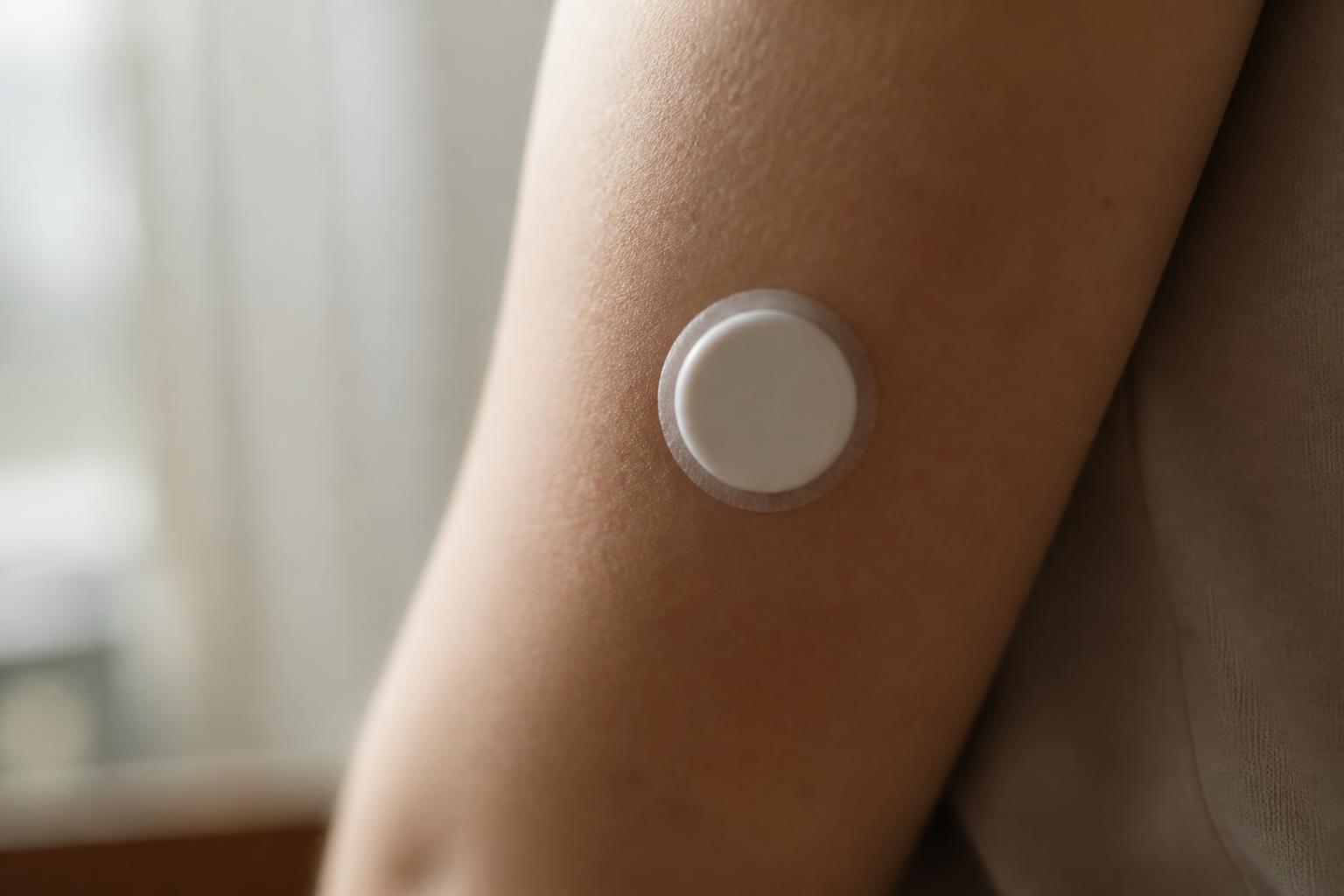
Continuous glucose monitors were built for a narrow, well-defined job: warning someone with diabetes when their blood sugar is heading somewhere dangerous. The FDA cleared the first over-the-counter versions for people without diabetes in 2024, and the consumer market built around them has, by most industry accounts, grown sharply since. A sensor about the size of a coin sits on the back of an arm for one to two weeks, reads interstitial glucose every few minutes, and feeds a smartphone app that turns the raw numbers into graphs, scores, and advice.
What is not in dispute is that the sensors work as measurement devices. They track glucose fluctuations with reasonable fidelity, and the data they generate is real. What is in dispute — and this is where the story actually is — is whether reading that data changes anything for someone who does not have diabetes, and whether the changes it does produce are worth what the devices cost.
What holds up
The device technology itself is legitimate, and its origin story is not marketing spin. CGMs have a genuine, well-established track record in diabetes care, where they have been shown to reduce dangerous blood sugar swings and cut the burden of fingerstick testing. That foundation is real, and it is the reason the technology earned enough trust to be sold over the counter in the first place.
There is also a plausible mechanism for why watching glucose in real time could change behavior, at least in the short term. Some smaller trials have found that pairing CGM data with coaching or dietary counseling modestly improved short-term dietary awareness — people who could see a spike after a particular meal sometimes ate differently the next time. That is a real, if narrow, behavioral effect, and it is consistent with a broader pattern in health tracking: feedback loops can shift behavior, at least for a while, even when the underlying health stakes for that individual are unclear.
And for a specific slice of the population — people with prediabetes, strong family history, or other risk factors who have not yet been diagnosed with diabetes — there is a more defensible case that watching glucose trends could catch an emerging problem earlier than annual bloodwork would.
What doesn't hold up
The gap opens once the question moves from “does this generate data” to “does using this data produce better health outcomes in people who don't have diabetes.”
A 2026 systematic review and meta-analysis in the “European Journal of Medical Research”, pooling both observational and interventional studies of CGM use in non-diabetic populations, concluded that the effect of CGM on glycemic parameters, body weight, and behavioral outcomes in this population “remains unclear” — the review's own language, not a hostile paraphrase. The studies it pooled were heterogeneous, often short, and rarely randomized against a meaningful control. That is not a review finding CGMs harmful. It is a review finding that the evidence simply has not caught up to the claims being made in its name.
A separate line of review work, focused specifically on cardiovascular prevention, reached a similar conclusion: CGM data has not been shown to translate into measurable reductions in cardiovascular risk in people without diabetes. Coverage of the 2026 review in trade press was blunter still, reporting flatly that continuous glucose monitors “show no proven benefits for healthy people” — a characterization that tracks with the underlying review, even if it strips out some of the academic hedging.
A device can measure something real and still not tell a healthy person anything worth acting on.
There is also a specific interpretive trap built into how these apps present data. Interstitial glucose readings in people without diabetes fluctuate constantly and, by clinical standards, harmlessly — a normal post-meal rise that a consumer app may flag with a red mark or a warning colour, borrowing visual language from diabetes management where that same rise might actually matter. Endocrinologists have raised concern that this can manufacture anxiety around eating patterns that are, physiologically, unremarkable. For someone with a history of disordered eating or high health anxiety, a device that turns every meal into a scored event is a plausible source of harm, not just a wash.
Cost is the other complicating factor rarely mentioned in the marketing. The two leading over-the-counter sensors run roughly $89 to $99 a month at list price — Abbott's Lingo at about $89, Dexcom's Stelo at about $99 — and because they are marketed as wellness devices rather than medical equipment, they are typically not covered by insurance for someone without a diabetes diagnosis. That is a recurring, indefinite cost for a benefit that, per the current evidence base, is not established.
What a reader should take from this
The honest version of this story has two halves, and neither cancels the other out. Continuous glucose monitors are a mature, validated technology for the population they were built for — people managing diabetes. For everyone else, they are a real-time data stream in search of a proven use case: the existing systematic reviews describe the evidence on glycemic, weight, and behavioral outcomes as unclear, and the evidence on hard cardiovascular endpoints as limited. That is not the same as evidence of no effect, and it leaves room for a possible modest behavioural nudge in some users. It is also not the confident metabolic-optimization case the consumer market is currently selling.
Someone with prediabetes risk factors and a doctor's involvement has a more defensible reason to try one than someone healthy chasing a “metabolic score.” For the latter group, the accurate framing is closer to expensive curiosity than proven health tool — and for anyone prone to anxiety around food or numbers, a real one to weigh before buying.
Sources & evidence
- “Continuous glucose monitoring in non-diabetic populations: a systematic review of observational and interventional studies with meta-analysis.” “European Journal of Medical Research”, 2026. doi:10.1186/s40001-026-03920-0
- “Non-Invasive Continuous Glucose Monitoring in Patients Without Diabetes: Use in Cardiovascular Prevention — A Systematic Review.” PMC12612783.
- News-Medical, “Continuous glucose monitors show no proven benefits for healthy people,” August 4, 2026.
- “The efficacy of using continuous glucose monitoring as a behaviour change tool in populations with and without diabetes: a systematic review and meta-analysis of randomised controlled trials.” PMC11668089.
- MedTech Dive, “Dexcom prices first over-the-counter glucose monitor” and “Abbott debuts Lingo over-the-counter CGM in the US,” 2024.
This article is general information, not medical advice. See our Editorial Standards.