Hyperbaric Oxygen and the Longevity Claim
A pressurised chamber, sixty sessions, and a telomere finding that launched an industry. The cognitive data is stronger than the anti-ageing data, and it is not the data being sold.
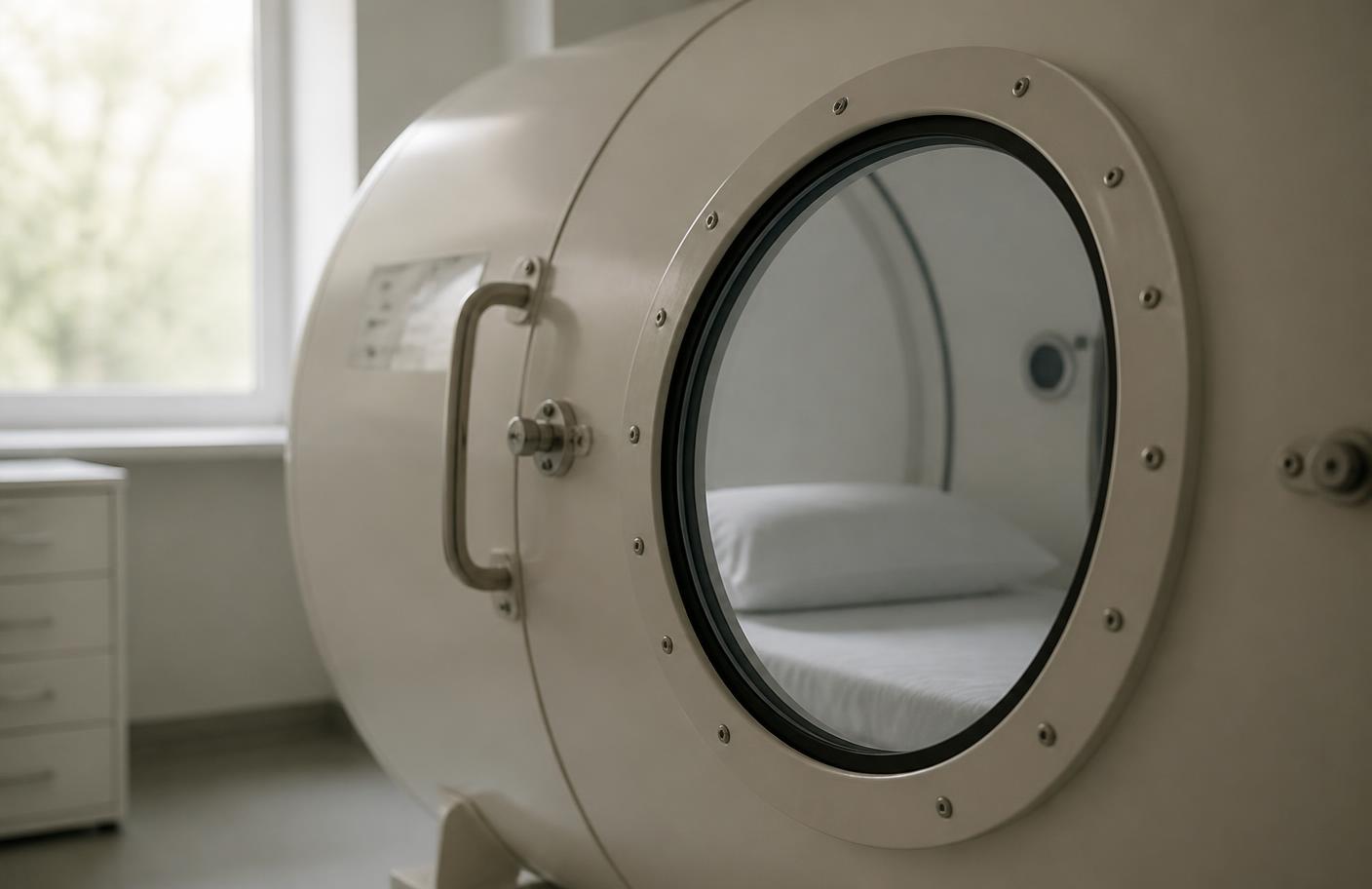
Hyperbaric oxygen therapy is not fringe. It is an established treatment with a defined list of approved indications — decompression sickness, carbon monoxide poisoning, certain non-healing diabetic wounds, radiation tissue injury, gas gangrene — where the mechanism is understood and the benefit is not seriously disputed.
Everything discussed below sits outside that list. The gap between the approved uses and the marketed ones is where this story lives.
What the protocol involves
The version of HBOT used in the ageing and cognition research is demanding. Participants breathe 100 percent oxygen inside a pressurised chamber, typically for ninety minutes, five days a week, for around three months — sixty sessions in total. This is not a spa visit, and the results from that protocol cannot be assumed to transfer to shorter courses, lower pressures, or the soft-shell chambers sold for home use.
That caveat is not a technicality. It is the single most common error in how this research is repeated.
The cognitive results
The most defensible finding is also the least dramatic. A randomised controlled trial in sixty-three healthy adults over the age of sixty-four reported improvements in cognitive performance after the sixty-session protocol — attention, information processing speed, and executive function — accompanied by measurable changes in regional cerebral blood flow.
This is a real randomised trial in an older population with a plausible mechanism: sustained hyperoxia driving angiogenesis and improved perfusion in tissue that was mildly underperfused to begin with. The blood-flow imaging matters, because it means the cognitive change is anchored to a physiological change rather than floating on questionnaire scores.
The limitations are the usual ones for this field. The sample is small, participants could hardly be blinded to spending ninety minutes a day in a pressure chamber, and the durability of the effect after sessions stop is not well established.
The longevity results, and what they actually showed
The finding that built the industry came out of Israel: after the same protocol, researchers reported lengthened telomeres in peripheral blood cells and a reduction in senescent cell populations.
Telomere length and senescent cell burden are both legitimate ageing-related measures. They are also biomarkers, not outcomes. No participant in that study lived longer, or was shown to be at lower risk of anything. What was demonstrated is that an intensive oxygen protocol moved two numbers that correlate with ageing in a direction associated with youth, in a small cohort, over a few months.
A biomarker that moves is a reason to run the longer study. It is not the result of the longer study.
The claim circulating downstream — that HBOT increases circulating stem cells by several hundred percent — traces to measurements of progenitor cell mobilisation, which is a known and expected response to hyperoxic stress. Cells appearing in circulation is not the same as tissue being repaired, and the figures quoted in marketing are typically peak values from specific protocols presented without that context.
The risks, which are real but manageable
Middle ear barotrauma is common enough to be an expected side effect rather than a rare one. Oxygen toxicity seizures occur at higher pressures. Temporary myopic shifts in vision are well documented with extended courses, and usually reverse. Confined-space fire risk is the reason accredited facilities have strict protocols about what can enter a chamber.
These are manageable in a properly run clinical facility with trained staff. They are less manageable in a wellness setting with a soft chamber and no medical supervision, which is where a growing share of the consumer market sits.
What a reader should take from this
There is a real randomised signal for cognition in older adults using an intensive sixty-session protocol, and there are interesting biomarker results on cellular ageing that justify longer and larger trials. There is not evidence that hyperbaric oxygen extends human life, reverses ageing in any meaningful clinical sense, or delivers those effects at the doses and pressures most consumer providers offer.
Anyone weighing a course should ask what pressure is used, how many sessions the quoted evidence involved compared with what is being sold, whether the facility is accredited, and who is present if something goes wrong.
Sources & evidence
- Cognitive enhancement of healthy older adults using hyperbaric oxygen: a randomized controlled trial, Aging
- Hyperbaric oxygen therapy, vascular dysfunction and amyloid burden in an Alzheimer's disease model and in elderly patients, Aging
- Hyperbaric oxygen therapy and post-concussion symptoms after childhood traumatic brain injury, retrospective cohort (2025)
- Undersea and Hyperbaric Medical Society, approved indications list
- New York Times, reporting on hyperbaric oxygen and longevity claims (March 2026)
This article is general information, not medical advice. See our Editorial Standards.