Klinik St. Georg: The German Hospital Betting on Heat for Chronic Lyme
Bad Aibling's whole-body hyperthermia protocol pushes core temperature to 41.6°C alongside IV antibiotics. The mechanism is coherent, the anaesthetic risk is real, and the controlled trials do not exist.

Klinik St. Georg — Clinicum St. Georg — sits in Bad Aibling, a spa town in Upper Bavaria about an hour southeast of Munich. It has run integrative oncology since the 1980s under Friedrich Douwes, and over the past two decades it has become the best-known European destination for patients with chronic Lyme disease who have exhausted conventional care at home. The draw is a single procedure: extreme whole-body hyperthermia, delivered in an intensive-care setting.
The mechanism, stated plainly
Borrelia burgdorferi is thermolabile. In culture, the spirochete does not survive sustained temperatures above roughly 41.6°C — a threshold the human body cannot reach through fever alone. St. Georg's protocol, which Douwes published as Antibiotic Augmented Thermo-Eradication, uses water-filtered infrared-A emitters to raise core temperature to between 41.6 and 41.8°C under general anaesthesia, held for a short window, typically across two sessions. Ceftriaxone and other antibiotics are given during and around the heat, on the argument that hyperthermia improves tissue perfusion and blood-brain barrier penetration while the pathogen is under thermal stress.
That is a more specific claim than the general 'heat boosts immunity' framing used by lower-temperature clinics. It is also falsifiable, which is a point in its favour. The clinic distinguishes its extreme protocol from moderate hyperthermia at 39.5–40.5°C, which is used adjunctively in oncology and has a separate literature.
What the evidence base actually contains
The published record for hyperthermia in Lyme is thin and internal. Douwes' AAT paper is a clinic-authored protocol description with follow-up outcomes, not a randomized controlled trial, and it appeared outside the mainstream infectious disease journals. There has been no independent replication, no placebo or sham comparator — difficult to construct for a procedure under anaesthesia — and no registry tracking relapse rates years out. Patient-reported outcomes are frequently positive, and the population is heavily self-selected: people well enough and wealthy enough to fly to Bavaria after years of failed treatment.
A coherent mechanism plus sincere patient reports is where medicine starts asking questions, not where it stops.
The risk side is not theoretical
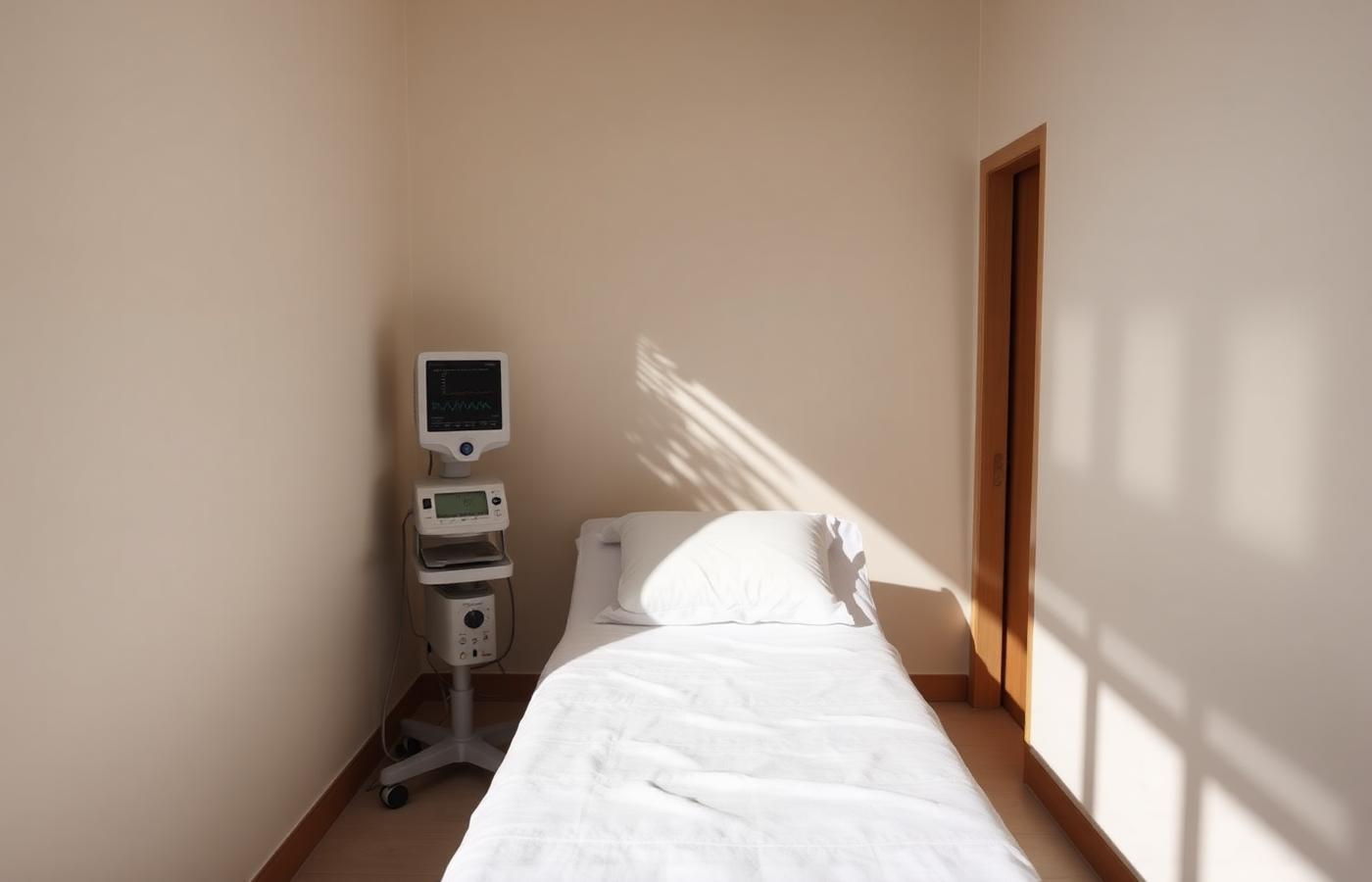
Extreme whole-body hyperthermia is an intensive-care procedure. Core temperature near 42°C stresses the cardiovascular system, and the protocol requires general anaesthesia, continuous haemodynamic monitoring, and fluid and electrolyte management. Documented risks across the hyperthermia literature include arrhythmia, hypotension, thermal injury, coagulopathy and, rarely, death. St. Georg's case for doing it is that a hospital with decades of volume and anaesthesiology on site manages that risk better than a wellness clinic with a heat chamber — which is true, and is also the strongest argument against seeking the same treatment at a cheaper provider.
Cost, logistics, and who goes
Treatment is self-pay for most international patients, with multi-week programmes commonly running into the tens of thousands of euros before travel and accommodation. Programmes typically combine the hyperthermia sessions with IV antibiotics, co-infection treatment, immune and micronutrient support, and detoxification protocols of varying evidentiary standing. Patients arriving from the United States are usually people whose physicians follow IDSA guidance, which does not support prolonged therapy for persistent symptoms, and who have concluded that guidance leaves them nowhere to go.
The questions worth asking before travelling are concrete. What is the target temperature and how many sessions? Who provides anaesthesia and what is the clinic's complication rate? What is included in the quoted price and what triggers an extension? What happens if symptoms return at six months — is repeat treatment expected, and at what cost? And who communicates with your physician at home once you fly back?
Our reading is unchanged from our 2026 survey of treatment-resistant Lyme: hyperthermia is the most mechanistically plausible of the unproven options, and it remains unproven. That is not a dismissal. It is a description of what a patient is actually deciding.
Sources & evidence
- Douwes F.R., The Integrative Lyme Disease Therapy Concept with Antibiotic Augmented Thermo-Eradication (AAT), Oncothermia Journal (2017)
- Clinicum St. Georg, Bad Aibling, published Lyme treatment protocol materials (accessed 2026)
- Lantos et al., 2020 IDSA/AAN/ACR clinical practice guidelines for Lyme disease, Clinical Infectious Diseases (2021)
- Berende et al., Randomized trial of longer-term therapy for symptoms attributed to Lyme disease, NEJM (2016)
- Reviews of adverse events and safety monitoring in extreme whole-body hyperthermia, International Journal of Hyperthermia
How we report on clinics: we rely on the clinic's own published materials, peer-reviewed literature on the therapies offered, regulatory and public records where they exist, and independent reporting. We do not visit as patients, accept payment, or receive referral fees. Where a treatment lacks randomized controlled evidence, we say so plainly. Costs and protocols change — confirm details directly with the clinic.
This article is general information, not medical advice. See our Editorial Standards.